
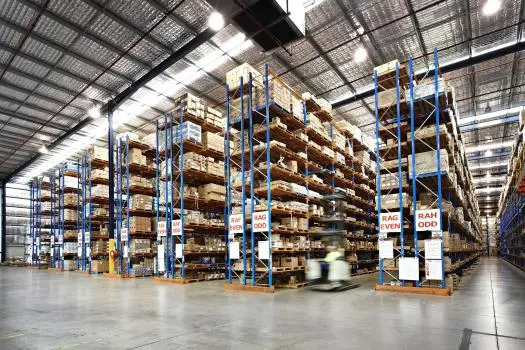
A high-density warehouse is an environment defined by continuous movement. With heavy forklifts navigating narrow aisles and high-volume inventory circulating around the clock, operational vulnerabilities can develop beneath the surface.
Racking damage isn’t always obvious. A minor impact from a reach truck might seem trivial at floor level, but the progressive stress placed on compromised steel can quietly jeopardise an entire storage system.
Leaving these minor defects unaddressed invites catastrophic rack collapses, extensive inventory loss, and severe workplace injuries. To keep your facility secure, compliant, and fully operational, regular racking inspections and proactive maintenance are the absolute standard.
Why Are Racking Inspections Important for Warehouses?
Compliance with Standards
Under Health and Safety at Work (HSWA) regulations, warehouse operators must maintain a safe environment for all personnel. Meeting local legislative standards and manufacturer design parameters is a foundational requirement. Locally, this demands strict compliance with current AS/NZS 4084:2023 specifications, which mandate that industrial pallet racking systems undergo inspections at least once every 12 months by a qualified professional to preserve their certified weight ratings.
Seismic Resilience
Storage structures face unique environmental variables, particularly the risk of ground movement. Minor structural damage—such as a slightly buckled bracing member or a sheared floor anchor—can severely jeopardise racking systems during seismic events. Even a small reduction in structural integrity can cause a localised impact to escalate into a full-scale failure when seismic forces are introduced.
Risk Mitigation
Structural fatigue develops over time. Catching small distortions through a comprehensive racking inspection routine allows your engineering team to isolate and repair localised faults long before they can manifest as sudden structural failures.
Injury Prevention
A compromised steel framework represents an immediate hazard to your warehouse team. Deteriorated racking structures pose a severe safety risk for personnel operating within the storage aisles. Consistent assessments guarantee that frames, beams, and baseplates remain fully capable of bearing their designated loads safely.
Inventory Protection
A structural collapse can instantly destroy valuable stock. Routine reviews ensure inventory remains well-protected and shielded from costly damage caused by falling pallets or structural degradation.
Downtime Prevention
An unexpected racking failure disrupts the entire supply chain, bringing operations to a halt for investigations, clearing debris, and structural rebuilding. Routine assessments prevent long periods of downtime after an incident, maintaining predictable logistics pathways.
Dexion’s Pallet Inspection Checklist
To assist floor managers in tracking structural health, we utilise a comprehensive, multi-point pallet inspection checklist during site audits. This practical overview outlines the core components requiring steady monitoring to satisfy your local pallet racking inspection requirements.
Incident Reporting and Pallet Integrity
- Log Verification: True workplace safety relies on immediate reporting. Every single forklift strike must be logged systematically so that targeted structural checks can be performed on the affected bays.
- Pallet Suitability: Industrial racking is engineered for precise load footprints. An essential part of a comprehensive pallet racking safety inspection is identifying and removing unsuitable pallets.
- Placement and Board Quality: Operators must ensure pallets are positioned symmetrically across both the front and back load beams. Pallets must feature intact front and back boards to secure placement, and any unit displaying structural splits, rot, or fracturing must be stripped immediately.
Frames, Baseplates, and Anchoring
- Upright and Bracing Damage: Framework must be checked for straightness, focusing heavily on low-height front-or-rear impact damage, as this remains the most common forklift impact zone.
- Anchoring Security: Engineers must verify that baseplates are securely anchored to the concrete floor slab with heavy-duty fasteners intact, unbent, and properly torqued.
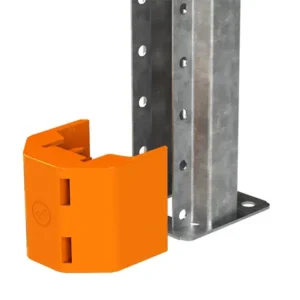
- Levelling and Protectors: Floor settling or severe impact can dislodge levellers or cause damaged baseplates, leading to a visible “lean” in the racking vertical profile. Simultaneously, the structural condition of deflecting pallet racking protectors must be reviewed to ensure they can still absorb operational impacts.
Beams and Structural Engagement
- Impact Distortion: Beams must be checked for both vertical and horizontal deflection. Inspectors look for distinct bends in the middle of beams while under load, alongside structural twisting or weld cracking at the end-connectors and hooks.
- Frame Engagement: A beam cannot achieve its rated load capacity if it is partially unseated. The inspection verifies that all connector hooks are completely and properly engaged into the upright profiles.
- Unauthorised Adjustments: Warehouse teams often alter beam heights to fit changing stock profiles without realising the structural consequences. The audit catches instances where beam levels have been altered (especially moved upward), which can alter and weaken the designed structural capacity of the frame.
Safety Locks
- Presence and Fit: Beam safety pins prevent beams from being accidentally dislodged by upward forklift movements. Verifying that all Beam-Safety-Locks are correctly fitted in every single connector is non-negotiable; missing locks must be replaced immediately.
- On-Site Contingency Stock: To remain aligned with industrial best practices, facilities must ensure a backup supply of Safety-Locks is kept on-site at all times to rectify missing pins the moment they are discovered.
Load Signs and Documentation
- Visibility: Operational load limits must be clearly communicated to your operators. Every racking run must display a highly visible, permanent Load-Sign at eye level.
- Compliance & Accuracy: Beyond visibility, these plaques must match the physical layout of the warehouse. Auditors ensure the sign meets local design standards and that the physical rack configuration (such as the maximum bottom-beam-height) matches what is stated on the sign.
Transitioning to Predictive Maintenance
While manual walk-throughs form the basis of floor safety, advanced logistics models are shifting beyond reactive maintenance into predictive maintenance to minimise downtime with automation.
In modern, automated storage facilities, physical inspections are augmented by continuous data loops. Systems like our MDS ASRS (Automated Storage and Retrieval System) broadcast live operational data for each independent shuttle directly to a centralised AI hub, allowing remote monitoring of machine and structural behaviour. By tracking metrics such as motor current draws, positioning tolerances, and travel speeds, the historical events of each shuttle are monitored to ascertain risks before problems arise on the warehouse floor.
Rather than adhering to an arbitrary calendar date, servicing and maintenance schedules are adjusted dynamically based on real-time data received from the tracking hub. Incorporating these predictive methodologies means components are serviced during scheduled, low-throughput windows. This integration of smart technology maximises ROI and throughput, ensuring your supply chain remains highly resilient.
FAQs for Pallet Racking Inspection in New Zealand
1. How often should I get my racking inspected?
In strict accordance with local compliance standards, a formal, independent pallet racking inspection must be carried out at least once every 12 months. High-volume distribution centers should supplement this with weekly internal visual sweeps conducted by trained safety officers.
2. What is the standard for pallet racking?
The primary operational framework is governed by the joint standard AS/NZS 4084:2023, divided into Part 1 (Design specifications and structural verification) and Part 2 (Operation and maintenance criteria for site operators).
3. How do local seismic codes alter standard pallet racking inspection protocols?
Because industrial storage systems must withstand dynamic ground forces, inspections place an elevated focus on the floor slab connection interface, baseplate integrity, and vertical plumb tolerances. An out-of-plumb frame or a missing floor anchor that might pass an inspection in a non-seismic zone represents an immediate compliance failure here, as the structure must be fully prepared to handle lateral seismic loads.
4. What specific pallet types are deemed “unsuitable” for warehouse racking configurations?
Standard selective pallet racking is engineered to support uniform, structural wooden or plastic pallets with clear bearer footprints. Unsuitable configurations distribute weight unevenly and can slip or cause localised beam deformation unless the racking is specifically outfitted with mesh decks or support bars.
5. Is a “Repair Certificate” mandatory after fixing high-risk racking damage?
Yes. Once structural damage (such as Amber or Red category defects) has been identified and subsequent remediation work is carried out, the racking cannot be reloaded or signed off as compliant until a competent person verifies the repair work matches manufacturer specifications and issues formal engineering clearance documentation.
Conclusion
Preserving the structural integrity of your industrial storage space demands constant attention. To ensure your facility complies fully with all regional safety standards, contact Dexion today to organise a comprehensive rack safety inspection. Our experienced technical team can provide you with a written audit and clear, actionable recommendations to improve the safety and longevity of your pallet racking system.