Warehouse Automation Explained | Warehouse Automation Solutions NZ
Supply chain operators across New Zealand are navigating a unique set of geographic and economic constraints. Between the logistical complexities of the “long white cloud” and the rising costs of industrial land in hubs like Auckland, efficiency has become the primary metric for success. To stay ahead, many local businesses are moving beyond traditional methods and investing in warehouse automation solutions NZ to streamline their operations and protect their margins.
Warehouse Automation Explained
At its core, warehouse automation involves the strategic application of technology to handle the movement, storage, and retrieval of goods with minimal human assistance. In the New Zealand context, this means transforming a manual facility into a data-driven environment where physical hardware and software work in tandem.
Modern trends are increasingly leaning toward warehouse AI automation, where systems no longer just follow static rules but use machine learning to predict demand spikes and optimise picking paths. This digital transformation allows Kiwi businesses to manage inventory more precisely, reducing the physical strain on staff and ensuring that local and international shipments are processed with maximum speed.
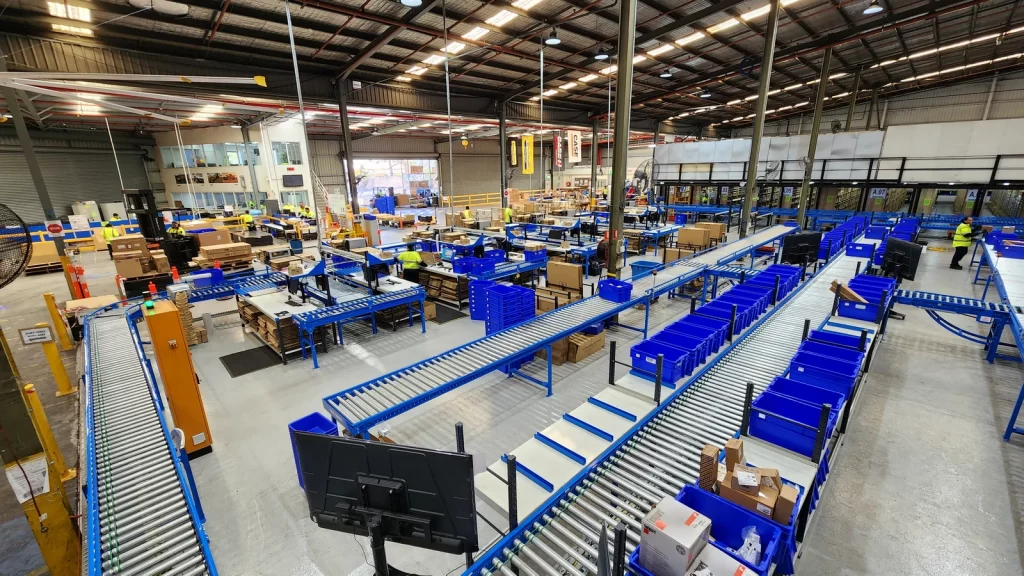
Levels of Warehouse Automation
Automation is not a one-size-fits-all solution; it exists in varying degrees of complexity depending on the needs of the business:
- Basic Warehouse Automation: Focuses on simple tasks, such as automated data entry, barcode scanning, and manual-assist conveyors to reduce walking distances.
- Warehouse Management System (WMS) Automation: Uses software to act as the “brain” of the warehouse, automating stock tracking, task interleaving, and order prioritisation.
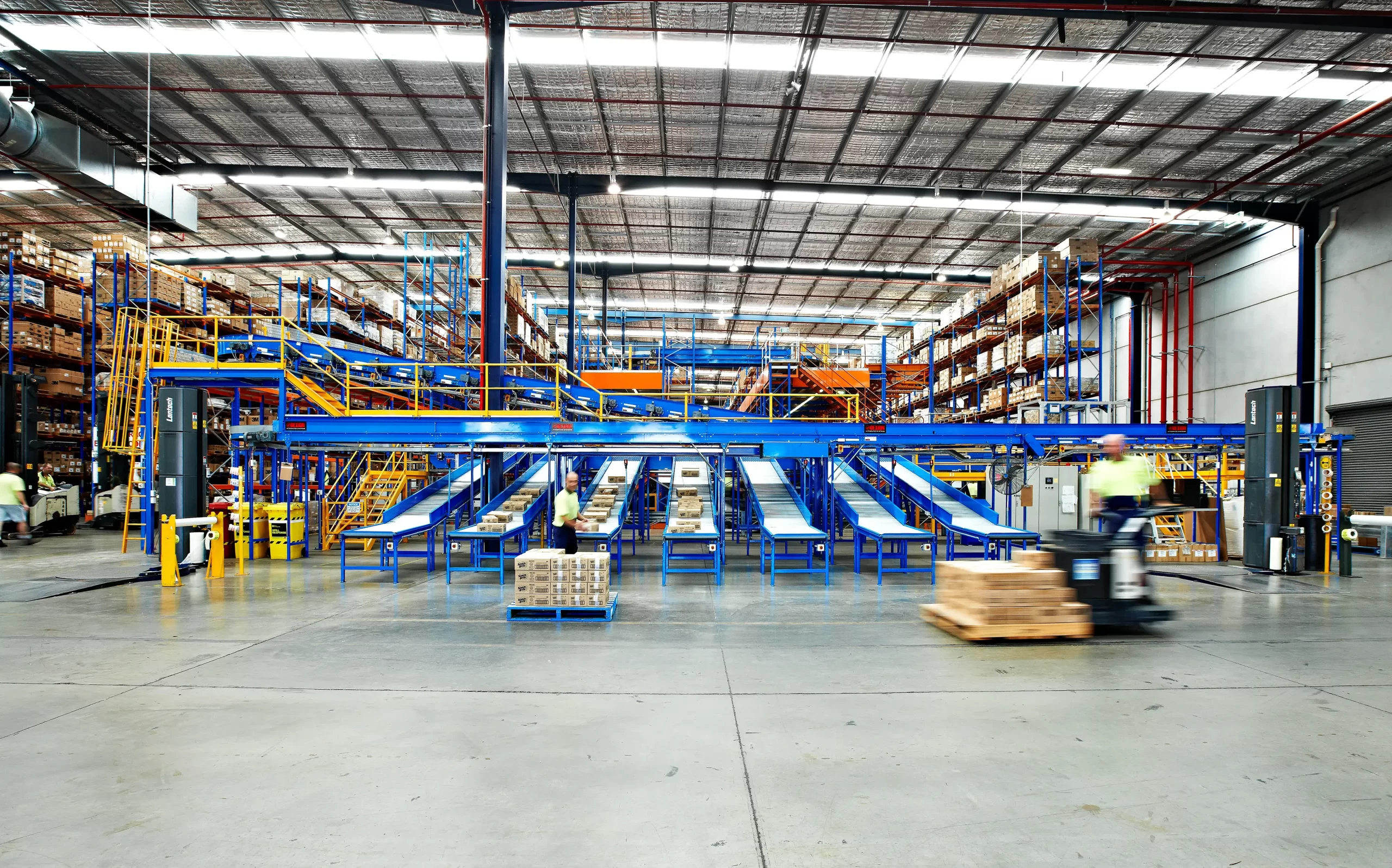
- Mechanised Warehouse Automation: Introduces heavy-duty hardware like sorters and carousels that take over the physical labour of moving goods through the facility.
- AI-Driven Warehouse Automation: The highest level, where warehouse AI automation coordinates robotic fleets and high-density storage to make real-time decisions based on live data.
Key Benefits of Warehouse Automation for NZ Businesses
Implementing warehouse automation solutions provides a technical and financial framework that allows Kiwi businesses to scale without being restricted by traditional manual limitations.
Substantial Throughput and Accuracy Gains
The most immediate impact of automation is the dramatic increase in order fulfilment speed. Automated systems can operate 24/7, maintaining a consistent pace that manual labour cannot sustain during peak periods. By integrating warehouse AI automation, businesses can reach higher accuracy rates, virtually eliminating the hidden costs of returns, re-shipping, and customer dissatisfaction caused by picking errors.
Enhanced Workplace Health and Safety (WH&S)
In the New Zealand industrial sector, managing the risk of workplace injury is both a moral and a regulatory imperative. Automation targets the “three Ds”—tasks that are dull, dirty, or dangerous. By utilising warehouse automation technology to handle heavy pallet movements and high-reach retrieval, companies remove personnel from high-risk zones, significantly reducing the likelihood of accidents and improving the overall ergonomic environment for the workforce.
Optimisation of High-Value Industrial Space
With industrial land in hubs like Auckland and Christchurch reaching premium prices, maximising the existing building footprint is essential. High-density warehouse automation systems allow for vertical expansion that is impossible with manual forklifts. By reducing aisle widths and utilising the full height of a facility, businesses can often double their storage capacity, delaying or entirely removing the need for expensive new site acquisitions.
Factors to Consider When Upgrading Your Warehouse
While the advantages are clear, the transition to an automated environment requires a robust integration strategy and a clear understanding of the local landscape.
Seismic Engineering and Compliance
Unlike many global markets, New Zealand requires all warehouse automation systems to be engineered to strict seismic standards (NZS 1170.5). High-density racking and ASRS must be designed to withstand significant lateral forces to protect both the inventory and the building structure. Ensuring your automation partner understands these unique structural requirements is critical for gaining building consent and ensuring long-term operational resilience.
Integration with Existing Digital Ecosystems
A common challenge in warehouse automation integration is the “software gap.” New hardware must communicate flawlessly with your existing Warehouse Management System (WMS) or ERP. Without a unified data layer, businesses risk creating operational silos where the speed of the hardware is throttled by slow data processing. A successful rollout requires a detailed digital roadmap that prioritises seamless data flow from day one.
Initial Capital Outlay vs. Long-Term ROI
The upfront cost of warehouse automation solutions NZ is a significant consideration for many mid-sized enterprises. However, the business case is increasingly built on the “cost of inaction.” When rising labour costs and space constraints are factored in, many facilities see a full return on investment within 18 to 36 months. It is essential to view automation as a multi-year strategic lever rather than a simple equipment purchase.
Is Warehouse Automation Right for Your Business?
Determining the suitability of automation for your New Zealand operation requires an analysis of your current bottlenecks and future growth projections. If your facility is struggling with high staff turnover, consistent picking inaccuracies, or a complete lack of available floor space, automation is no longer a luxury—it is a necessity.
Assessing Operational Readiness
Businesses that benefit most from automation typically manage high-volume, repetitive SKU movements. If your data shows that a significant portion of your labour cost is spent on “travel time”—workers walking through aisles to retrieve stock—then a goods-to-person system will provide an immediate uplift in productivity. Furthermore, if you are planning to scale into the e-commerce space where same-day or next-day delivery is expected, the speed and precision of warehouse AI automation are required to meet those market demands.
ROI and Sustainability
Finally, consider the long-term sustainability of your manual processes. As the NZ labour market remains tight, the ability to “scale through intelligence” rather than headcount is the only way to protect margins. Investing in a modular automation path allows you to start small—perhaps with a single ASRS or a smart conveyor line—and expand as your ROI is proven, ensuring the technology grows alongside your business.
Dexion as Your Warehouse Automation Specialist
Dexion delivers future-focused warehouse automation solutions engineered specifically for the New Zealand industrial landscape. By integrating advanced technology with world-class structural engineering, Dexion ensures that every system is not only compliant with local safety and seismic standards but is also optimised for peak volumetric efficiency.
MDS ASRS (Multi-Directional Shuttle)
For operations requiring a higher degree of selectivity and throughput, the Dexion MDS ASRS offers a sophisticated solution. This autonomous multi-directional shuttle system navigates a condensed racking framework across three axes, providing high-speed access to every pallet location. By eliminating the need for traditional forklift aisles, the MDS ASRS provides an incredibly dense storage environment while maintaining the agility needed for fast-moving inventory.
Smart Roller Conveyors
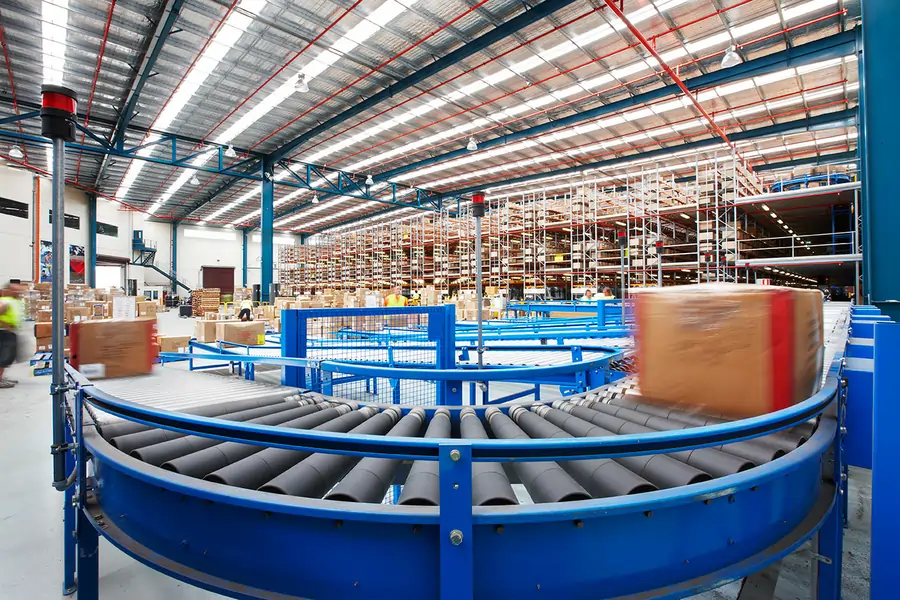
Material handling within a Dexion-automated facility is managed through Smart Roller Conveyors. These systems move beyond basic transport by incorporating intelligent functionality such as product tracking and zero-pressure accumulation. This ensures that inventory flows smoothly from the storage zone to the dispatch area without manual intervention or the risk of product collision, creating a seamless, “lights-out” logistics workflow.
Dexion ASRS Racking
Dexion ASRS Racking serves as the high-density foundation for automated storage and retrieval. Purpose-built to handle the dynamic loads and high-speed movements of automated cranes and shuttles, this racking framework allows facilities to maximise their vertical storage capacity. In a market where land costs are high, these stable, high-bay configurations enable businesses to significantly increase their pallet counts without expanding their building’s physical footprint.
Conclusion
As supply chain pressures continue to grow, the adoption of warehouse automation technology is no longer a luxury but a necessity for long-term resilience. By partnering with a dedicated specialist like Dexion, New Zealand businesses can ensure their facility is ready to meet the demands of tomorrow. Contact Dexion to get a one-to-one consultation today about your facility requirements and tailored storage needs.
Frequently Asked Questions About Warehouse Automation
1. What is Warehouse Automation?
It is the use of technology—ranging from WMS software to robotic picking systems—to automate the storage and movement of goods within a warehouse with minimal human intervention.
2. Why is Warehouse Automation Growing in New Zealand?
The combination of high land prices, labour shortages, and the need for seismic-rated storage has made automated efficiency a priority for local businesses.
3. What Are Some Types of Warehouse Automation Systems in New Zealand?
Common warehouse automation systems include the MDS ASRS, Smart Roller Conveyors, and ASRS Racking systems.
4. How Does Warehouse Automation Technology Improve Efficiency in New Zealand Warehouses?
It increases throughput by operating 24/7, reduces errors by eliminating manual data entry, and maximises space through high-density vertical storage.
5. Is Warehouse Automation Suitable for Small and Medium-Sized Businesses in New Zealand?
Yes. While large-scale ASRS is common for big enterprises, SMEs can start with basic automation levels, such as WMS integration or modular conveyors, to scale their operations progressively.