How AI-Driven ASRS Shuttle Systems are Enhancing Warehouse Operations
With industrial land in hubs like Auckland and Christchurch reaching record valuations and a tightening labour market across the country, businesses are increasingly looking beyond traditional storage methods. The transition toward warehouse automation is no longer a futuristic concept—it is a strategic necessity.
At the forefront of this shift is Dexion’s MDS ASRS (Multi-Directional Shuttle), a system that integrates AI automation to transform static storage into a dynamic, high-performance asset.
What is the AI-Powered MDS ASRS Shuttle System?
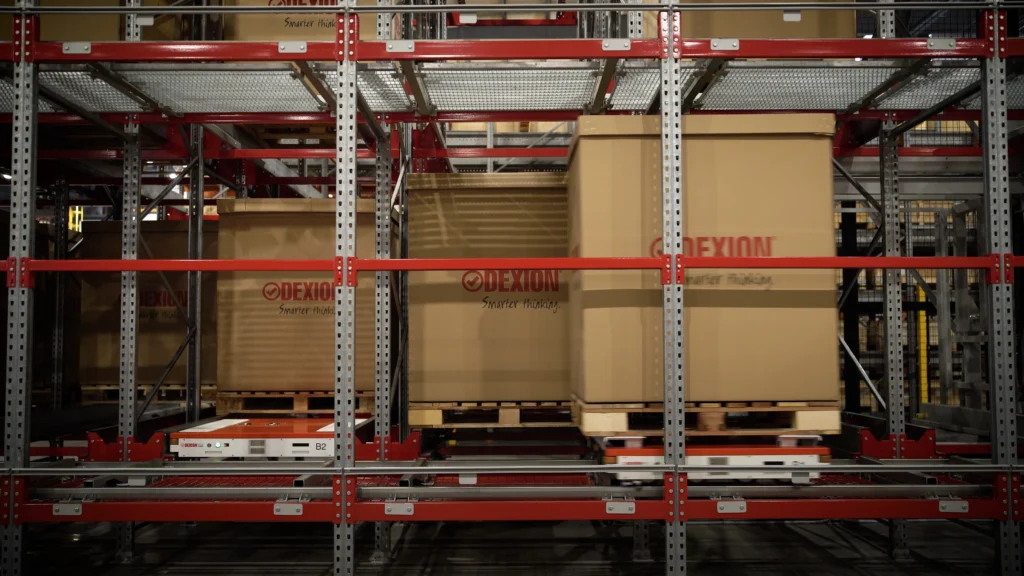
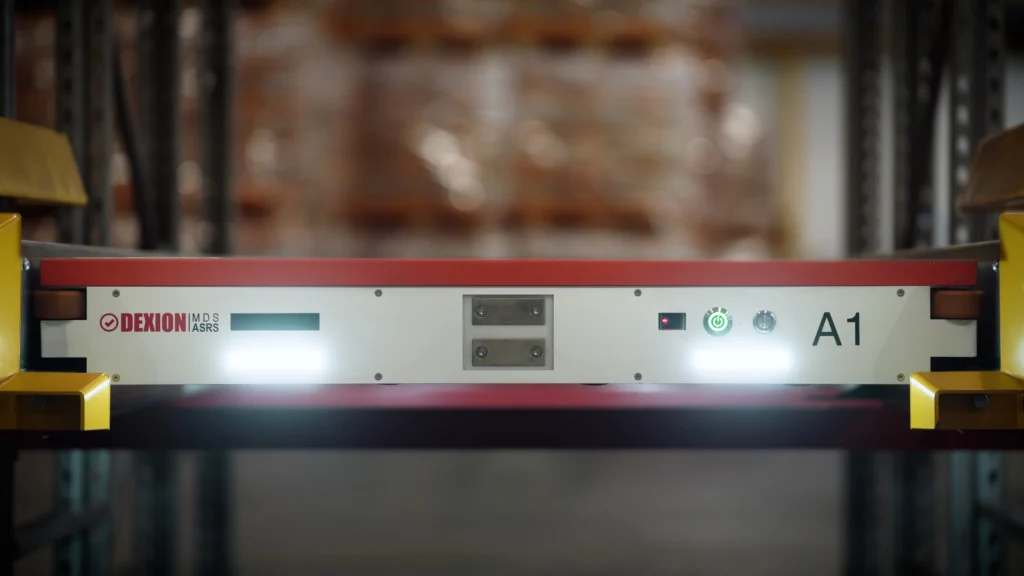
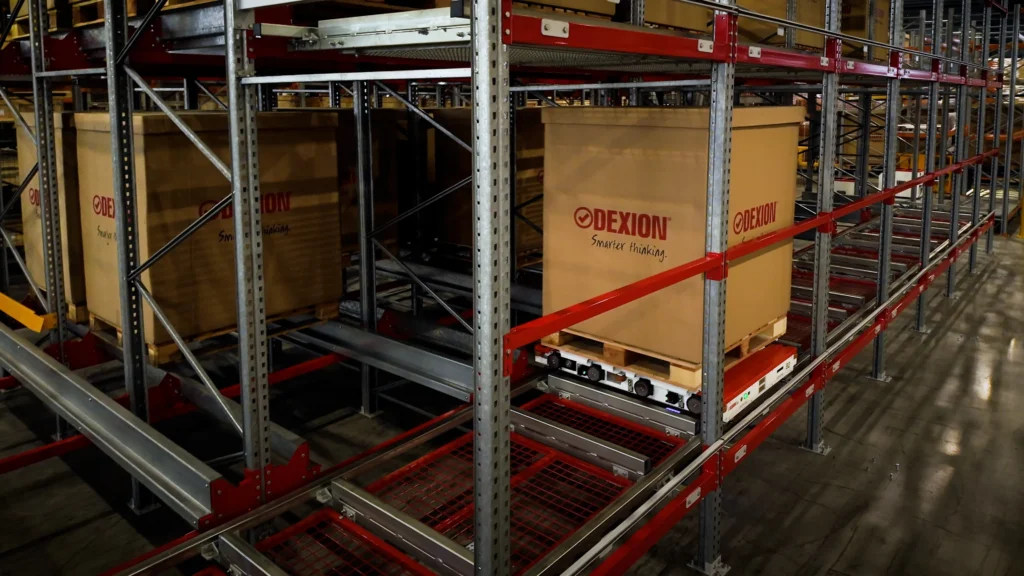
The Multi-Directional Shuttle (MDS) ASRS is a sophisticated, autonomous ASRS shuttle system engineered to navigate pallets within a highly condensed racking framework.
The MDS ASRS utilises a specialised 16-wheel configuration that allows it to travel across both the depth and width of the racking levels. This multi-directional capability means the shuttle can switch between aisles and levels independently, completely removing the requirement for large, aisle-bound cranes or complex fixed conveyor systems at every tier.
The integration of AI into the ASRS system is what elevates the MDS from a mechanical tool to an intelligent operator. The system does not merely follow a set of rigid commands; it uses machine learning automation to assess its environment in real-time. By processing data on current traffic, order priority, and pallet locations, the AI determines the most efficient path for every movement, ensuring that the fleet operates as a cohesive, self-optimising unit.
Why AI-Powered MDS ASRS is Important in Warehousing Solutions
The primary challenges facing Kiwi warehouses—limited floor space, rising operational costs, and the need for precision—are directly addressed by the MDS framework.
Overcoming Limited Space
Industrial land availability in New Zealand’s major metropolitan areas is finite. For businesses to grow without relocating to more distant regional hubs, they must look upward and inward. High-density storage is the only viable path to maximising existing footprints. The MDS ASRS can increase storage capacity by up to three times compared to conventional racking systems. By eliminating the wide aisles required for forklifts and reach trucks, the system reclaims up to 80% of what was previously wasted floor space, allowing for thousands of additional pallet positions within the same building envelope.
Data-Driven Efficiency
Traditional storage is often a “black hole” of data. Once a pallet is put away, its movement is rarely optimised unless a human operator intervenes. AI automation changes this dynamic. By continuously collecting data on shuttle performance and SKU turnover, the system identifies “hot” and “cold” zones within the rack. It can automatically perform “housekeeping” during quiet hours—repositioning fast-moving pallets closer to dispatch faces—to ensure that peak-hour throughput is as high as possible.
Simplified Operations with Less Equipment
One of the most significant advantages of the MDS is its ability to simplify the warehouse floor. With its 16-wheel configuration, the shuttle facilitates both horizontal and vertical movement across different levels. This internal mobility means you no longer need a forest of supplementary material handling equipment. By moving away from crane-reliant ASRS, you reduce the physical complexity of the warehouse, which in turn lowers the number of potential failure points and streamlines the entire logistics flow.
Features of the AI-Powered MDS ASRS Shuttle System
The MDS is defined by its intelligence. It is not just a machine that moves; it is a system that “thinks.”
AI-Driven Fleet Coordination
In an MDS environment, you aren’t just running a collection of shuttles; you are deploying an intelligent fleet. A central AI engine coordinates every unit using “swarm-style” coordination. Much like a school of fish or a swarm of bees, the shuttles communicate to ensure they never compete for the same lane or create a bottleneck. If one 4-way shuttle is delayed, the others adjust their routes instantly to maintain the overall flow of the facility.
Real-Time Control and Routing Optimisation
Continuous data exchange between the shuttles and the management software enables dynamic task allocation. Traditional automation is often hamstrung by its inability to react to changing demands. However, through machine learning automation, the MDS ASRS learns your warehouse’s operational patterns. It anticipates demand surges based on historical data, ensuring that routing is optimised not just for the current pallet, but for the next fifty orders in the queue.
Zero Code Shuttle Scaling
New Zealand businesses often face high seasonality—from the summer fruit exports to winter retail peaks. The MDS system allows for “Zero Code Scaling,” meaning you can add or remove shuttles from the grid to match your workload without needing to rewrite software or shut down the facility for reconfiguration. You can scale up for peak seasons and scale down when operations normalise, providing a level of agility that fixed-crane systems simply cannot provide.
Performance and Efficiency Benefits of AI-Powered MDS ASRS
Beyond the technical specifications, the Dexion MDS ASRS provides a robust business case for New Zealand operators looking for long-term operational resilience.
Scalability That Matches Real Operations
The distributed infrastructure of the MDS ASRS supports growth without the “all-or-nothing” investment required by traditional automation. Because the racking is modular and the shuttles operate independently, you can start with a system that fits your current needs and expand both the capacity and the throughput as your business grows. This modularity makes it as suitable for a regional distributor as it is for a national 3PL hub.
Faster ROI
A common misconception about warehouse automation is that it takes a decade to see a return. In reality, the MDS ASRS delivers such significant improvements in labour efficiency and space utilisation that most operations achieve a full payback within 12 to 18 months. By reducing the reliance on manual forklift operators and virtually eliminating pallet and rack damage, the system pays for itself through consistent, error-free performance.
Reduced Maintenance Time
System downtime is a major concern in logistics. The modular design of the 4-way shuttle system ensures that there is no single point of failure. If a single shuttle requires attention, it can be easily removed from the racking for servicing while the rest of the fleet continues to work. Technicians can often troubleshoot issues remotely using real-time diagnostic data, restoring the system to full operation with minimal on-site downtime.
Long-term Viability
The modularity of the MDS extends its operational life far beyond that of bespoke machinery. As business needs change—perhaps you begin handling different pallet sizes or your SKU variability increases—the system can be upgraded or extended. This flexibility ensures your investment remains relevant for decades, rather than becoming a legacy burden.
Versatility of Our MDS ASRS Shuttle System
The flexibility of the Dexion MDS makes it the preferred solution across a vast range of environments.
Modern and Retrofit Warehouses
The system is as effective in an older, irregular-shaped building as it is in a new, high-bay purpose-built facility. Because the 4-way shuttle system does not require perfectly straight, crane-ready aisles, it can be customised to fit around existing pillars, low ceilings, or non-standard warehouse footprints.
Ambient to Coldrooms
New Zealand’s primary sector relies on cold chain. The MDS ASRS is engineered to operate in coldroom environments ranging from -25°C to 50°C. In cold storage, every cubic metre of chilled air is an expense. By utilising high-density MDS racking, businesses can significantly reduce their energy bills while ensuring that frozen foods, dairy products, and fresh produce are handled with 100% accuracy.
Small to Large Scale Operations
Whether you are managing a boutique pharmaceutical inventory or a massive beverage distribution centre, the system scales with you. It is particularly effective for facilities handling over 1,000 pallet positions, where it can manage mixed SKUs and varied pallet sizes with ease. It also excels in stock buffering and sorting, acting as a high-speed engine for outbound order consolidation.
Applications for the MDS ASRS Shuttle System Across Industries
The versatility of the four way shuttle system makes it a vital asset across several key New Zealand sectors. The system provides the technical foundation required to meet local compliance and throughput demands while maintaining a condensed footprint.
Pharmaceuticals
In the pharmaceutical sector, the MDS ASRS ensures uncompromising accuracy with automated batch tracking and strict FEFO (First-Expired, First-Out) management. By integrating machine learning automation, the system guarantees that high-value, temperature-sensitive medicines are handled with total traceability and GxP (Good x Practice) compliance. GxP compliance refers to a group of quality guidelines and regulations that need to be fulfilled primarily in fields like pharmaceuticals and biotech. For pharmaceutical warehousing, GxP compliance ensures that medicines are stored, handled, and accurately tracked to safeguard the quality and safety of products.
Food & Beverage
In the food and beverage warehouses, the MDS ASRS system operates seamlessly down to -25°C, making it a critical asset for New Zealand’s dairy, meat, and fresh produce exports. High-density storage reduces the total volume of chilled air required, while AI automation sequences outbound pallets to match transport schedules and extend shelf life.
Manufacturing
For manufacturers, the MDS ASRS acts as a high-speed engine for raw material storage and work-in-progress (WIP) buffering. Implementing this warehouse automation directly into the production line reclaims floor space for machinery and synchronises material delivery with real-time production needs.
3PL & Retail
Retailers and 3PL providers use the 4-way shuttle system to manage high SKU variability and the rapid turnover of modern e-commerce. In AI-optimised retail warehouses, the system can strategically pre-position fast-moving goods during off-peak hours, allowing Kiwi businesses to meet aggressive delivery windows without increasing labour costs.
Conclusion
The AI-powered MDS ASRS represents the pinnacle of modern warehouse automation. By combining the physical agility of a four-way shuttle with the cognitive power of machine learning automation, it allows pallets to move smarter, faster, and more efficiently. For New Zealand businesses, the benefits are clear: reduced energy use, faster flow of goods, and a system that scales seamlessly with demand.
If you are ready to audit and enhance your warehouse performance, get in touch today for a comprehensive site assessment. Our team can develop bespoke layout plans precisely mapped to your operational requirements, showing you exactly how the MDS ASRS can be integrated into your existing facility to drive immediate efficiency.